

Virtual Event Sponsorship Opportunities: What Actually Works Online
Virtual event sponsorship opportunities are still surprisingly underused. A clear understanding of what a virtual event is helps explain why sponsorship behaves differently online compared to physical events.
In-person conferences have long understood how to integrate sponsors naturally into the experience. Exhibition stands, branded materials and sponsored sessions are accepted and expected. Online events, by contrast, often either ignore sponsorship entirely or insert it awkwardly.
Neither approach makes the most of the opportunity.

Pros and Cons of Virtual Events: A Practical Comparison
The pros and cons of virtual events are often framed as a simple trade-off between convenience and atmosphere.
In practice, the comparison is more practical than emotional. Virtual and in-person formats solve different problems.
Understanding the real pros and cons of virtual events means looking clearly at what each format does well. A clear definition of what a virtual event is helps frame where those strengths and limitations come from.

What Is a Virtual Event? Definition, Formats and How They Work
A virtual event is an event that takes place entirely online, with speakers and audiences joining remotely rather than gathering in a physical venue.
When people ask what is a virtual event, they are usually referring to an organised session that happens fully online rather than in a physical location.
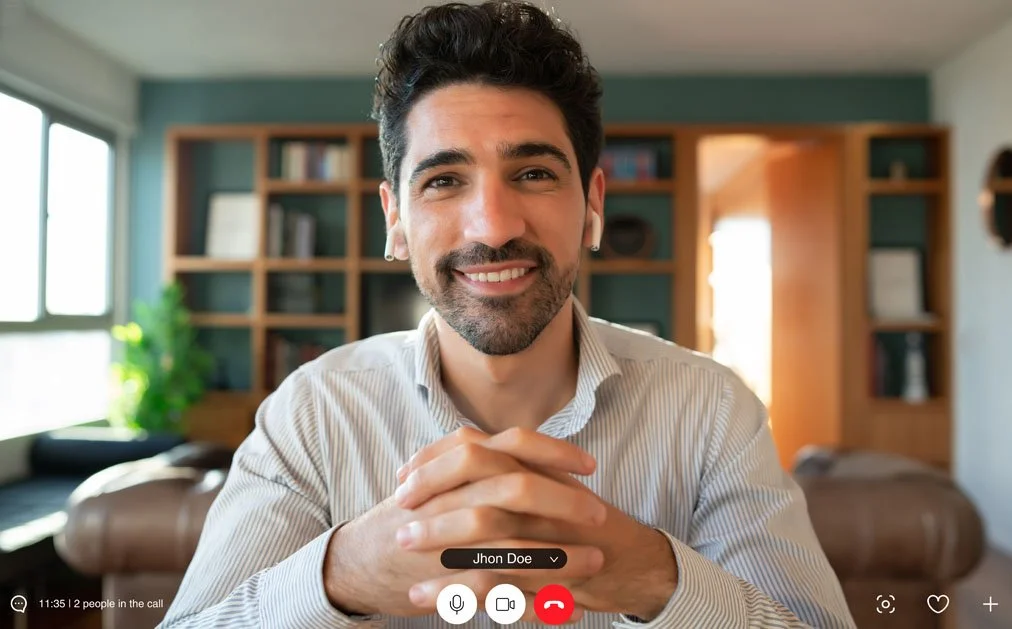
At its simplest, and sometimes at its worst, a virtual event can resemble a standard video call.

How to Plan a Hybrid Event: A Practical Guide
If you are figuring out how to plan a hybrid event, the first thing to understand is this: it is not just an in-person event with a live stream attached.
Planning a hybrid event means designing one experience that works in two environments at the same time.
One audience is in the room. One audience is online. If either group feels secondary, the whole event feels uneven.

Pros and Cons of Hybrid Events: What You Need to Consider
The pros and cons of hybrid events are often discussed in simple terms. Wider reach is presented as the obvious advantage. Added complexity is described as the main drawback.
In reality, the pros and cons of hybrid events run deeper than that.
Hybrid events can be powerful. They can also become complicated quickly.

Benefits of Online Conferences: When the Format Makes Sense
It is fair to say that in-person conferences are often preferred over online ones.
Face-to-face networking, informal conversations over coffee and spontaneous discussions between sessions are difficult to replicate online, and they should not be forced.
An online conference is not a replacement for human connection in a room.

Virtual Event vs Live Stream: What’s the Difference?
The virtual event vs live stream question comes up constantly, and for good reason. On the surface, they look similar. Both involve video transmitted online in real time.
But they are not the same thing.
A live stream describes how something is sent. A virtual event describes how something is designed and delivered. That distinction is where the real difference lies.

Online Conference vs Virtual Event: What’s the Difference?
Technically, every online conference is a virtual event. In practice, they are not treated the same. The difference is not about the platform. It is about scale, structure and responsibility.
When people debate online conference vs virtual event, they are usually trying to understand what level of delivery and preparation is actually required.
Webinar vs Online Conference: What’s the Difference?
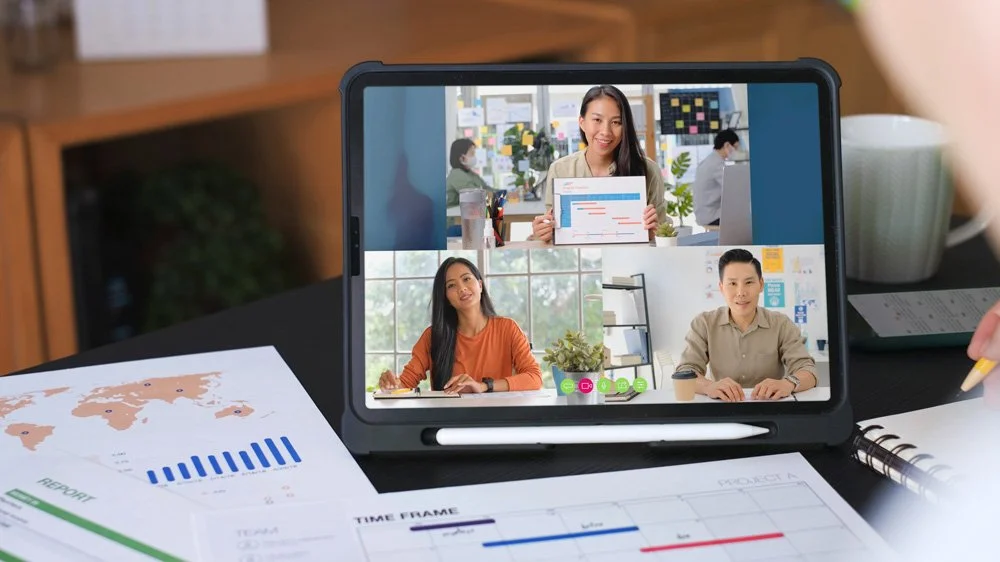
At first glance, a webinar and an online conference can look almost identical. People speaking online, slides on screen, an audience watching remotely.
But once you step back and look at scale, structure and expectation, the differences become clearer.

What Is an Online Conference?
An online conference is a structured, multi-session event delivered entirely online.
Unlike a single webinar, it usually runs across several hours or even multiple days and involves multiple speakers, multiple sessions and clear progression across the programme. There is a defined agenda, deliberate transitions and someone actively holding the structure together.

What Is a Hybrid Event? Definition and How It Works
What is a hybrid event? At its simplest, it is an event that combines a physical, in-person experience with a fully integrated online one. That does not simply mean streaming a live event.
A genuine hybrid event brings together:
An audience in the room
An audience online
Speakers on stage in the room
Speakers joining remotely online
All within the same live event.

Hybrid Event vs Live Stream: What’s the Difference?
Hybrid event vs live stream is a comparison that comes up regularly, and the two are often treated as if they mean the same thing. They don’t.
A live stream is usually a broadcast.
A hybrid event is an integrated experience that combines an in-room audience and an online audience within the same live event, allowing both environments to be seen, heard and, where appropriate, interact with each other.

Hybrid Event vs Virtual Event: What’s the Difference?
The terms get mixed up constantly. Some people call everything hybrid. Others call everything virtual. In simple terms, the distinction is straightforward.
A virtual event takes place entirely online. A hybrid event combines a physical, in-person experience with a fully integrated online one.

Benefits of Hybrid Events: Why the Format Can Be Powerful
Hybrid events are not automatically better than virtual or in-person formats. They are more complex, more technical and often more expensive.
But when used deliberately, they can be powerful. The real benefits of hybrid events go beyond logistics. They shape how people feel about leadership, how connected teams feel across locations, and how seriously an organisation treats moments that matter.

Virtual Events Best Practices: What Actually Makes Them Work
When people search for “virtual events best practices”, they are rarely looking for theory.
In our experience, they are usually planning something. They want to know what will make their next event better than the last one they ran. They want to avoid the awkward bits, the overruns, the flat moments. They want it to feel deliberate.

How Long Should a Virtual Event Be? Finding the Right Duration
“How long should a virtual event be?” is one of the first questions asked when people are planning an online event.
In our experience, it usually comes from uncertainty. Many organisers are doing this for the first time and they are worried about one thing above all else, and that is people dropping off.

Types of Virtual Events: Choosing the Right Format for Your Audience
When people search for “types of virtual events”, they are not looking for theory. They have been asked to organise something and need to understand their options quickly.
What normally works?
What is realistic?
How complex is each format?
The bigger issue is not a lack of formats. It is misunderstanding them.
Are Virtual Events Here to Stay? What Has Changed and What Still Works
“Are virtual events here to stay?” is a question that comes up regularly, especially after a run of disappointing online experiences.
It is often asked with the assumption that virtual events were a temporary solution, useful during lockdowns but no longer relevant now that in-person events are back.
The reality is more nuanced.

Virtual event checklist: why ticking boxes is not enough
A virtual event checklist is an essential part of planning any online or hybrid event.
It helps teams stay organised, avoid obvious mistakes and feel confident that nothing basic has been missed. In that sense, checklists are not the problem. They are usually a sign that someone is taking the event seriously.
The problem starts when a virtual event checklist is asked to do more than it realistically can. A checklist is excellent at getting you to the start line. It is far less useful once the event goes live.

Virtual Event Engagement: Why Attention Drops in Online Events
When people talk about virtual event engagement, they usually jump straight to tools, polls or interactive features. In reality, audiences often disengage long before any of that matters.
Most virtual events lose people in the opening minutes, not because the content is weak, but because the event feels amateurish or poorly run. Once that impression forms, attention drops and it rarely fully recovers.