

Why Multiple Short Virtual Events Work Better Than One Long Event
On paper, one long virtual event makes sense.
You bring everything together, cover the full topic, and get everyone in one place at the same time.
In practice, it rarely works that way.
The biggest constraint is attention.
People are busy. Their calendars are full. And online, there’s very little keeping them in front of their screen if something doesn’t feel relevant.
Why Online Events Are Now a Core Part of Corporate Communications
Online events existed before COVID, but during the pandemic they moved from being occasional to essential very quickly.
That hasn’t changed.
They’re now part of the default mix of how internal and external communication happens.
One of the biggest reasons online events have stuck is simple.
They reach more people, more easily, at a lower cost.

What Senior Leaders Need from a Hybrid Event Setup (and What Usually Goes Wrong)
On the surface, a well-run hybrid event doesn’t look that complicated.
There’s a room with people in it, an online audience, and a link between the two. Senior leaders present in the room and occasionally bring in remote speakers or locations.
That simplicity is exactly what makes it misleading, especially when compared to a purely online format.
In reality, it’s one of the easiest formats to get wrong.

Why Virtual Events Become High Risk When Senior Leaders Are Involved
On paper, a virtual event featuring senior leadership doesn’t look that different to any other session.
It’s still delivered on a platform like Teams or Zoom. There’s still a structure, a set of presenters, often slides, and usually some form of Q&A.
But in practice, it’s a completely different environment.
As soon as senior leaders are involved, the dynamic shifts.

When You Can Run a Virtual Event Yourself (and When You Really Shouldn’t)
Most virtual events start off being run internally.
Platforms like Zoom and Teams are familiar, the tools are built in, and for a lot of straightforward sessions, that works perfectly well.
The problem isn’t that doing it yourself is wrong. It’s knowing where the line is.
There are plenty of situations where bringing in external production just isn’t necessary.
Internal updates, small team sessions, or low-visibility events where there’s no real pressure on it.

How to Choose a Virtual Event Production Company (Without Getting It Wrong)
Choosing a virtual event production company can feel straightforward.
Lots of event providers appear to offer the service, and everything looks very polished on the surface, particularly on their website.
We obviously have a vested interest in this because this is what we specialise in, but most of the issues we see don’t come from bad intentions or poor planning. They come from choosing the wrong type of provider in the first place.

Using Pre-Recorded Content in Virtual Events
Most organisations default to running virtual events live.
It feels more natural, more immediate, and on the surface, more “authentic.” In many internal or DIY setups, there’s also a practical limitation. The platforms and tools being used don’t easily support pre-recorded content, so everything ends up being delivered live by default.
Pre-recorded content shifts the balance between risk and control in your favour.

What Makes a Virtual Event Feel Calm and Under Control
You can usually tell within a few minutes whether a virtual event is in control or not, and it rarely comes down to one obvious problem. It’s more subtle than that.
There’s a sense that people are slightly unsure, things are being worked out as they go, and no one is fully in charge, which makes the event feel tense for the presenters and, more importantly, look tense to the audience.

Why Timing Matters More Than You Think in Virtual Events
In a physical setting, there’s a level of social pressure that keeps people in the room.
If something starts five minutes late, people stay seated. If a session runs over, they might check their watch or their phone, but they’ll usually sit it out.
Online, that disappears.
People join on the minute because it’s in their calendar, and they leave just as quickly because they’ve almost always got something else to go to straight after. There’s no one watching, no judgement, no awkwardness, and no reason to stay.
What Senior Leaders Actually Need from a Virtual Event Setup
Most virtual events give senior leaders the bare minimum.
They join a call, share their screen, speak, and leave. Technically, it works, but it’s a long way from what they’re used to in a live environment, and it’s one of the reasons it can feel like an uncomfortable experience.
On stage, they feel supported. They have speaker support, visual aids, and clear guidance around them. Online, very often they’re left with none of that and expected to manage it themselves.

How to Prepare Senior Leaders for a Virtual Event
Most senior leaders are not difficult to work with.
They’re used to speaking, used to being visible, and used to handling pressure.
The problem is how they’re prepared for virtual events.
In most cases, it falls into one of two extremes, and neither of them works particularly well.

How to Run a Virtual Event with Senior Leadership
Most virtual events are relatively straightforward.
They’re planned internally, delivered on familiar platforms, and run by teams who have done it before. In many cases, that works perfectly well.
That changes quickly when senior leadership is involved.
The stakes are higher, the visibility is higher, and internally people are far more aware of what happens if it doesn’t go to plan.

What Makes an Online Event Risky (and How to Reduce the Risk)
Most online events don’t feel particularly risky at the start.
They’re often familiar. People are used to running meetings on Teams or Zoom every day, so it’s easy to assume an event will work in the same way.
That familiarity leads to complacency, and that’s where a lot of the risk comes from.
What Makes an Online Event Look and Feel Professional
Most online events don’t feel like a professional online event.
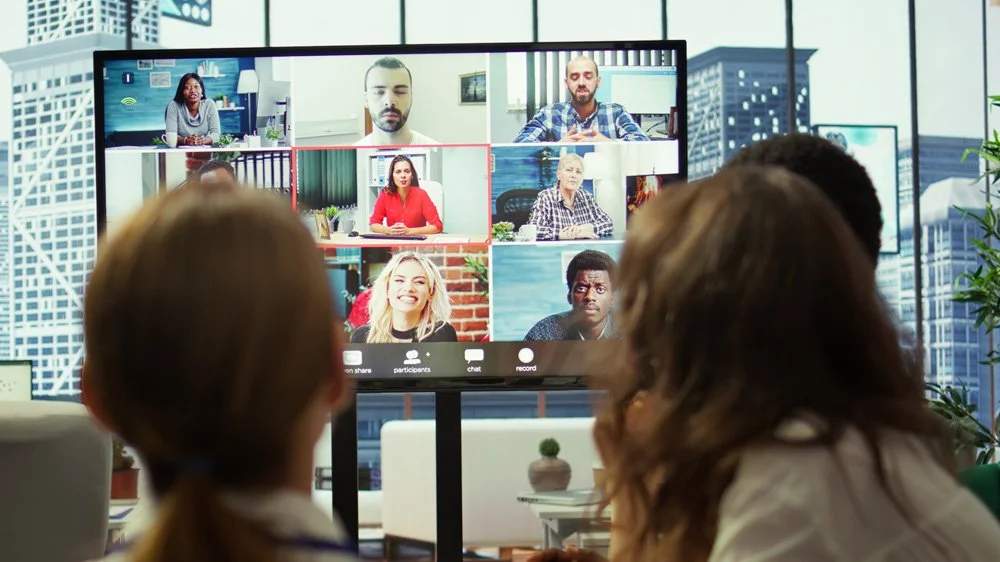
They work in the sense that people can see and hear what’s going on and the content gets delivered, but they don’t stand out in any way. Most of them look exactly like everything else people sit through on Zoom and Teams every day.
The same speaker view. The same slightly awkward pacing. The same “can you see my screen?” moment when someone tries (and most of the time fails) to show their slides.
That becomes the baseline, and the standard across the board is very low.

Why Senior Leaders Don’t Like Virtual Events
Most senior leaders won’t say it directly, but a lot of them don’t enjoy virtual events.
On paper, the reach and accessibility are there and the format makes sense.
In practice, the experience of taking part often feels very different to what they’re used to, and that’s usually where the hesitation comes from.

Why Virtual Events Fail (Even When the Technology Works)
Most virtual events don’t fail because of technology.
The platform works. The stream stays connected. People can see and hear what they need to.
And yet, the event still doesn’t land properly.
It feels flat. Slightly awkward. Not quite in control.
That gap between something working and something feeling properly delivered is where most virtual events fall short.

How to Run a Virtual or Hybrid Corporate Town Hall That Actually Works
Corporate town hall meetings can be awkward.
They sit in a slightly different category to most internal events. On paper, they are just another update. In reality, they tend to carry far more weight than that suggests.
For many organisations, this is one of the few times in the year where senior leadership is visible to the entire business at once.
That changes the expectation immediately. It is not just about sharing information, it is about how that information is delivered, and how it is received.
It has to feel right.

When Should You Hire Virtual Event Production? (and When to Keep It In-House)
Most internal events begin in a fairly straightforward way.
They are planned using familiar tools, delivered through platforms the organisation already uses, and managed by people who have run similar sessions before.
In many cases, that approach works perfectly well. The structure is simple, the expectations are clear, and the stakes feel manageable.
The difficulty is that not every event stays in that category.

When Hybrid Events Are the Wrong Choice (And What to Do Instead)
Hybrid events are often seen as the best of both worlds.
You get the energy of a live audience and the reach of an online one. On paper, it sounds like a straightforward improvement on a standard event.
In practice, that isn’t always the case.
There are plenty of situations where hybrid is the wrong choice, and forcing it usually creates more problems than it solves.

Hybrid Events Best Practices: What Actually Makes Them Work (And What Doesn’t)
If you search for hybrid events best practices, you will find a lot of advice.
Most of it sounds reasonable, but very little of it is written by people who are actually responsible for delivering these events properly. That shows up quite quickly when you move from planning into the reality of running one.
A lot of what is described as “best practice” is really just a description of what a good outcome looks like, rather than an explanation of how to achieve it.