
Virtual Event Engagement: Why Attention Drops in Online Events
When people talk about virtual event engagement, they usually jump straight to tools, polls or interactive features. In reality, audiences often disengage long before any of that matters.
Most virtual events lose people in the opening minutes, not because the content is weak, but because the event feels amateurish or poorly run. Once that impression forms, attention drops and it rarely fully recovers.
Virtual event engagement is not something you add later. It is the result of how the event is planned, produced and delivered from the very start.
Understanding what a virtual event actually is helps clarify the role the format plays, and knowing how to plan a virtual event properly is often the difference between early attention and early drop-off.
Engagement is lost before it is ever created
The fastest way to lose an online audience is a poor start. Muted speakers. Awkward delays. Unclear audio. Someone asking if everyone can hear them.
Those early moments immediately signal that this is just another call, something people can half-watch while checking emails or scrolling their phone.
When that happens, you will not be able to improve virtual event engagement later on because you will not really have an audience to engage with.
A calm, professional opening changes expectations straight away. Even something simple, like a short countdown with music before the event begins, signals intent, preparation and control before anyone appears on screen.
This is where professional virtual event productionmakes a visible difference.

Length matters more than people admit
Attention spans are not just getting shorter, people are becoming far more selective about how they spend their time.
In a world of constant notifications and endless scrolling, asking someone to sit through a two or three hour virtual session is a big ask. For most events, shorter is better.
A well-planned 45 minute session respects the audience’s time. It fits into the working day and leaves people feeling the event had purpose, rather than dragging on.
Longer sessions are possible, but only when they are carefully structured and tightly produced, supported by broadcast-level virtual event production. Without that discipline, virtual event engagement drops quickly.
Deciding how long a virtual event should be is often part of that discipline.
People disengage when they feel ignored
Another common reason virtual event engagement fails is that audiences do not feel genuinely involved.
People can tell when engagement is performative. Sanitised Q&A sessions, heavily filtered questions or token interactions make viewers feel like spectators rather than participants.
Engagement improves when audiences see that their presence actually matters.
Simple moments make a difference. A question from a named audience member being addressed live. Visible signs that comments are being seen. Early interaction that proves the audience is part of the event, not an afterthought.
This is especially important in Hybrid Events, where remote audiences are often at risk of feeling secondary.
Planning alone does not guarantee engagement
Many organisers assume that if they plan enough interactive moments, virtual event engagement will take care of itself. In practice, engagement often fails not because ideas were missing, but because execution fell short.
A common scenario is an event that includes a strong engagement idea, but it never quite lands live. A speaker forgets to reference it, the moment is skipped to save time, or because no one is properly directing the show, it never quite lands.
The audience will pick up on that immediately.
What could have been a point of connection instead reinforces the sense that they are being ignored. Once that happens, recovering attention is difficult.
Engagement is an outcome, not a feature
The biggest misunderstanding about virtual event engagement is the idea that it can be switched on. It cannot.
Engagement comes from knowing what you want the audience to think, feel and do, and designing the event around that.
When those elements are in place, people stay with you. When they are not, no amount of interaction or technology can force engagement back.
This is where professional Online Conference production becomes critical.
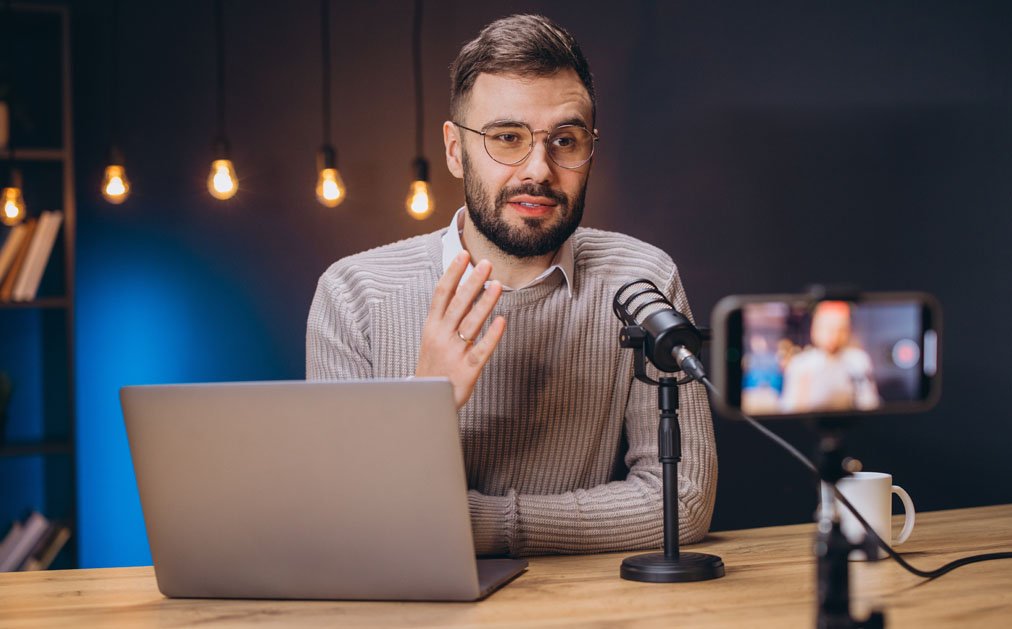
Why production quality makes the difference
There is a clear pattern in the events people remember.
Well-produced virtual events stand out because they do not feel like normal calls. They feel intentional, structured and controlled.
Poorly produced events blend into the background of daily meetings, where multitasking is normal and attention is optional.
That difference is not accidental.
Virtual event engagement depends heavily on production quality, not because it looks impressive, but because it shows the event has been properly thought through.
Many of the underlying principles sit within consistent virtual events best practices applied before anyone joins the call.
The real cost of getting it wrong
When virtual event engagement drops, the consequences are not always obvious in the moment.
People rarely complain. They drift away, stop paying attention, or keep the event open in the background while doing something else.
The result is an event that feels flat, forgettable and ineffective, even if nothing technically failed.
For organisers, that often means wasted budget, disappointed stakeholders and the uncomfortable sense that the event did not land as it needed to.
Virtual event engagement starts before you go live
The most engaging virtual events are not defined by clever interaction. They are defined by clear thinking, proper preparation and calm delivery.
They are defined by clear thinking, proper preparation and the kind of calm delivery that experienced virtual event specialists bring to high-stakes moments.
When the audience feels considered from the outset, and when the event runs smoothly enough that they can focus on the content rather than the process, virtual event engagement follows naturally.
It is designed into the event long before anyone goes live.
If you’re responsible for delivering a virtual event and would like to talk it through, you can book a call here and I’ll happily chat it through with you.