
Hybrid Event Strategy: Why Most Plans Fail Before the Event Starts
Most hybrid event strategies don’t fail on the day.
They tend to fail much earlier, usually at the point where the event is first described.
Someone decides that it is going to be hybrid, and from that point on the rest of the planning is built around that decision rather than questioning whether it is the right one in the first place.
That is where problems start.
The problem with most hybrid event strategies
Most hybrid event strategy conversations begin with the format.
Should this be hybrid?
Should there be a room as well as an online audience?
Can it be streamed out at the same time?
Those are not unreasonable questions, but they are not the right starting point.
Hybrid is not just a format choice. It is a decision that affects complexity, risk and how much control is needed to make the event work properly.
Once that decision is made, everything else becomes more demanding.
What a hybrid event strategy should actually start with
A more useful starting point is much simpler.
What do you want the audience to think, feel and do as a result of the event?
That needs to apply across the whole audience, not just the people in the room or the people joining remotely. If those groups are having noticeably different experiences, the strategy is already under strain.
If there is still uncertainty around the format itself, it is usually worth stepping back and being clear on the difference in Hybrid Event vs Virtual Event before committing to a direction.
If the fundamentals of the format are unclear, it also helps to revisit What Is a Hybrid Event so the decision is grounded properly.
Where hybrid event strategies start to break down
Once the format is agreed, most plans look sensible on paper.
The agenda is set, speakers are confirmed, a platform is chosen and a venue is booked.
At that point, there is often a sense that the structure is in place.
The issues tend to appear when you look more closely at how the event will actually run.
1. Integration is underestimated
Hybrid is often treated as a live stream with some additional interaction layered on top.
In practice, it requires the room and the online environment to work together properly. The in-room audience needs to hear and see remote contributors clearly, and those joining remotely need to feel confident contributing without hesitation or confusion.
If that integration is not designed properly, the experience starts to separate. The room carries on as the primary event, while the online audience feels like it is watching something secondary. That gap is difficult to recover once the event is live.
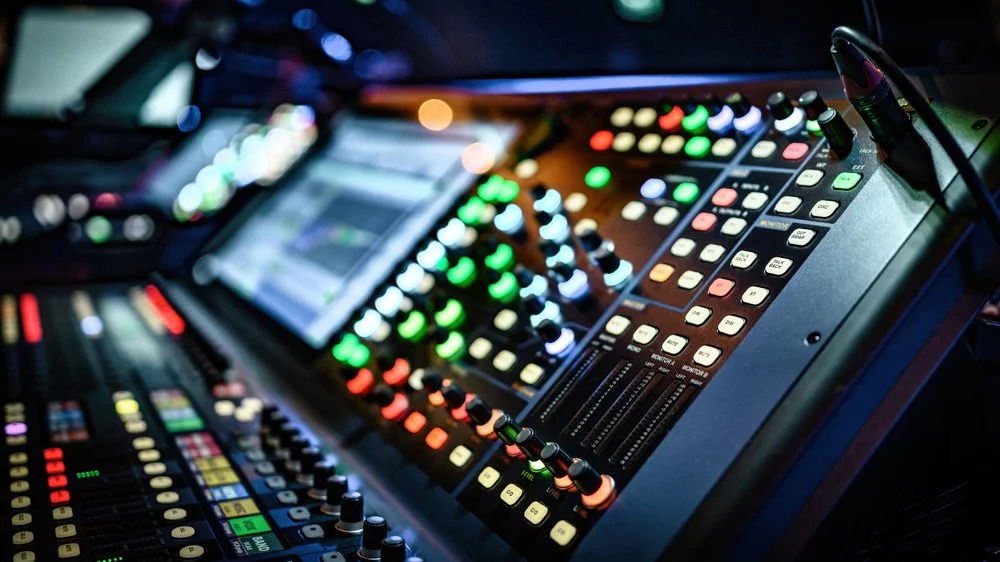
2. Things get more complex faster than expected
Each additional element adds something else that needs to be managed.
Room audio has to be handled correctly.
Cameras need to be positioned and switched between.
Remote speakers need to be brought in at the right time.
Two audiences need to be managed at once.
None of this is unusual on its own, but together it creates a level of complexity that is easy to underestimate during planning.
This is why the Benefits of Hybrid Events are only realised consistently when that complexity is controlled. Without that control, the format creates more problems than it solves.
3. Responsibility becomes unclear
This is one of the more common points of failure.
Hybrid events often involve multiple parties, including internal teams, venues, AV providers and platforms. Everyone has a role, but no one is clearly responsible for the overall outcome.
That becomes a problem in live situations where decisions need to be made quickly. If responsibility is shared, decisions slow down and hesitation becomes visible.
Hybrid events do not respond well to that. They need clear ownership.

4. The audience drifts
This is where the gap between planning and reality becomes obvious.
The event may be structured correctly, but the experience is not consistent. The room feels like the main focus, while the online audience feels slightly removed from what is happening. Remote speakers can also feel disconnected if they are not integrated properly.
None of this is dramatic in isolation, but it changes how the event is experienced overall. Once that gap is there, it is difficult to correct in real time.
What a working hybrid event strategy looks like
A good hybrid event strategy is not about adding more elements or features.
It is about making clear decisions early and making sure those decisions hold up during delivery.
The outcome is defined clearly.
The structure supports that outcome.
The level of complexity matches the importance of the event.
Responsibility sits with people who can make decisions when it matters.
Most importantly, the event is designed as a single experience rather than two separate ones running alongside each other.
Hybrid event strategy and risk
Hybrid events carry more visible risk than fully virtual ones because there are more moving parts and more dependencies between them.
If something goes wrong in the room, the online audience sees it. If something does not work for remote contributors, it affects how the room experiences the event as well.
That visibility is part of what makes hybrid effective when it is done well, but it also means that problems are harder to contain.
As events become more complex, that risk increases. This is why the level of structure and control needs to match the scale and visibility of the event.
A better way to approach hybrid event strategy
Instead of starting with the format, it is more useful to work backwards from the outcome.
What do you want the audience to think, feel and do?
From there, the question becomes whether that outcome can be delivered clearly across both environments.
If it cannot, hybrid may not be the right choice.
If it can, then the focus shifts to whether the structure and delivery support that outcome properly.
That is what determines whether the strategy will work in practice.
If you are working through that process in more detail, it often starts with How to Plan a Hybrid Event so the structure is clear before complexity is introduced.
Final thought
Hybrid event strategy is not really about combining a room and an online audience.
It is about deciding how much complexity you are prepared to take on and making sure that complexity is controlled.
When that is handled properly, hybrid can be a very effective format.
When it is not, the gaps show quickly and are difficult to hide once the event is live.
If you’re responsible for delivering a hybrid event and want it to run properly, you can book a call and talk it through.
No pressure. Just a straightforward conversation about what you are planning and how to make sure it works.