
Online events existed before COVID, but during the pandemic they moved from being occasional to essential very quickly.
That hasn’t changed.
They’re now part of the default mix of how internal and external communication happens.
Online events solve a problem that hasn’t gone away
One of the biggest reasons online events have stuck is simple.
They reach more people, more easily, at a lower cost.
Bringing 1,000 people together in a physical space is expensive and time-consuming. Travel, venues, logistics, and time away from work all add up quickly.
Doing the same thing online removes most of that friction.
That trade-off hasn’t changed.
The technology has caught up (and become accessible)
Another reason they’ve become embedded is that the technology is no longer a barrier.
Platforms like Teams and Zoom are already part of daily working life. People know how to join, how to interact, and what to expect.
On top of that, the broadcast tools behind the scenes are far more capable than they were a few years ago, and far more affordable.
For the cost of a subscription, organisations now have access to platforms that can handle registration, analytics, and large-scale delivery reliably.
That level of capability, for the price, is difficult to ignore.

People have built online events into how they work
Behaviour has shifted as well.
People are used to having time in their diary blocked out for online content, whether that’s meetings, updates, or larger internal events.
Joining something online feels normal.
There’s no travel, no disruption to the day, and no real barrier to attending.
That convenience is hard to replace.
But expectations have changed
What has changed is the level of tolerance.
During COVID, people were more forgiving.
Technical issues, awkward pauses, “can you hear me?” moments, they were expected.
That’s no longer the case.
Now, people expect online events to just work.
If they don’t, people switch off quickly.
That shift is subtle, but it matters. It’s one of the reasons the gap between something that simply works and something that feels properly delivered has become more noticeable, and it’s explored further in ‘Benefits of Virtual Events: Why They Still Matter’.
Shorter online event formats are now the norm
Another change is how content is consumed.
Long, two or three-hour online sessions are far less common.
Instead, organisations are moving towards shorter, more focused events.
30 to 60 minutes.
People are still willing to give up their time for an online event, but they expect it to be used well and are far less tolerant of having it wasted.
Just because it’s easier doesn’t mean it’s simple
One of the reasons online events have become so common is that they’re accessible.
Anyone can set one up.
Anyone can share a link.
Anyone can go live.
But that accessibility can be misleading.
Just because you can upload a video to the corporate YouTube channel from your phone doesn’t mean you should.
Running something basic is straightforward. Running something that reflects well on the organisation is different.
That’s usually the point where organisations start to question the difference between doing it internally and bringing in support, which is exactly what’s explored in ‘When You Can Run a Virtual Event Yourself (and When You Really Shouldn’t)’.
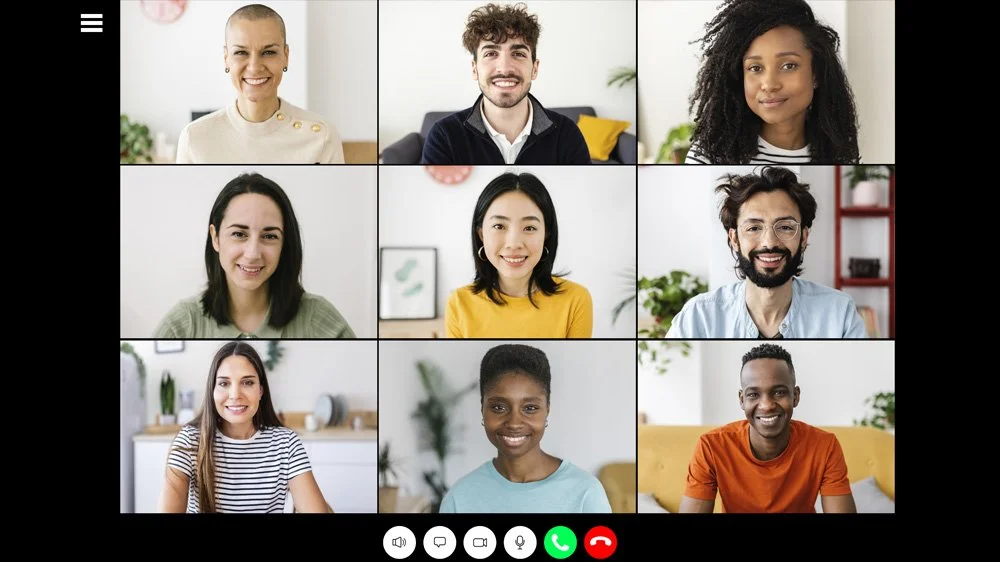
Why online events aren’t going away
At this point, online events aren’t a temporary solution or a fallback.
They’re a practical, scalable way of communicating with large groups of people.
They fit how organisations operate.
They fit how people work.
And they solve problems that physical events can’t always address.
That’s why they’ve stayed.
Where this leaves most teams
The challenge for most organisations isn’t whether to run online events.
It’s how to run them in a way that actually reflects well.
Because while the barrier to entry is low, the standard across the board is still relatively low as well.
A lot of events are under-rehearsed, under-produced, and put together with the assumption that “good enough” will land.
Often, it doesn’t.
That creates an opportunity.
When something is structured properly, delivered cleanly, and clearly thought through, it stands out immediately because it’s different to what people are used to seeing.
That’s typically where bringing in Virtual Event production becomes relevant, not because the event can’t happen without it, but because of how it needs to come across.
If you've got a virtual event or hybrid event coming up and would like experienced specialists to handle the production side of things, please do get in touch and let's see how we could work together.