
Most online events don’t feel particularly risky at the start.
They’re often familiar. People are used to running meetings on Teams or Zoom every day, so it’s easy to assume an event will work in the same way.
That familiarity leads to complacency, and that’s where a lot of the risk comes from.
Why online events aren’t taken as seriously as they should be
Because online meetings are so common, the line between a meeting and an event gets blurred.
People approach them in the same way. Less preparation. Less structure. Less time spent thinking about how it will actually run.
If the same group of people were presenting on a stage in front of 500 people, they’d rehearse. They’d check everything. They’d treat it properly.
Put that same audience behind a screen, and that level of attention often drops.

The biggest online event risk
Most problems in online events come down to assumptions.
Assuming videos will play properly and everyone will be able to hear them.
Assuming slides will work and presenters will know how to handle them.
Assuming the audience has the right link and knows how to join.
Assuming everything will just come together on the day.
Without proper checks and backups, you’re relying on every individual element working absolutely perfectly, and that’s just not how it works in the real world.
Why not rehearsing creates problems
One of the most common issues is a lack of rehearsal.
In a lot of cases, presenters are effectively delivering their content for the first time while the event is live. They haven’t run through it properly, they’re not fully comfortable with the flow, and they’re figuring parts of it out as they go.
That’s when hesitation creeps in.
Timing drifts. Transitions feel uncertain. People start second guessing what happens next.
It doesn’t need to go badly for it to feel off.
Where technical risk actually sits
Technical risk isn’t usually about the platform failing.
It’s about not having backups in place.
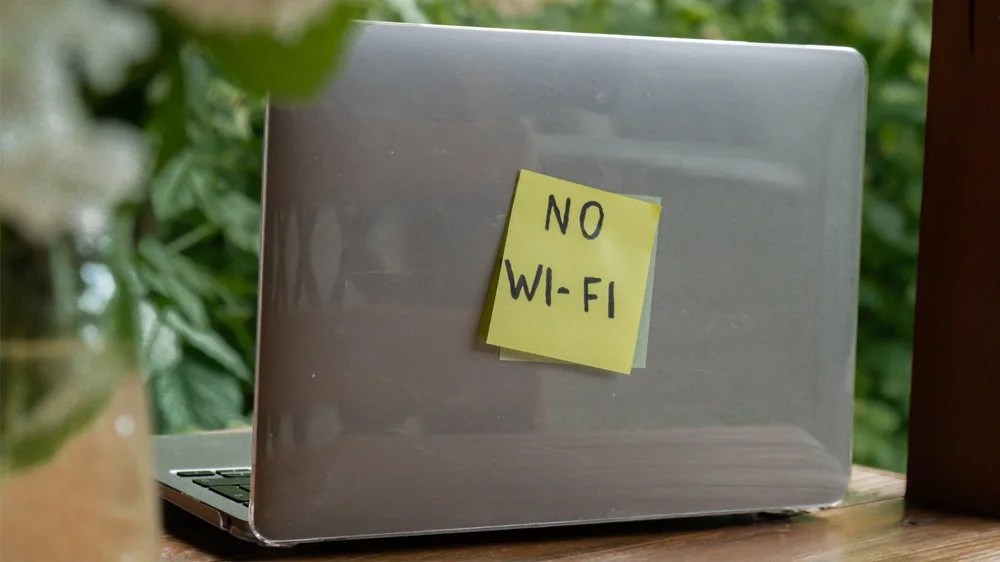
Running everything from a single laptop. Relying on Wi-Fi instead of a hardwired connection. Having no fallback if something drops out or doesn’t behave as expected.
If you’re serious about the event not failing, there needs to be redundancy built in.
That might mean multiple machines, backup streams, or alternative ways of getting content out if something changes.
How small issues turn into visible problems
Most online events don’t fall apart because of one big failure.
They fall short because of small issues stacking up.
A video doesn’t play properly. A speaker isn’t quite ready. A transition takes longer than it should. Someone steps in to fill a gap.
Individually, they’re manageable.
Together, they make the event look and feel like a bit of a mess.
That’s the same pattern seen in ‘Why Virtual Events Fail’, where nothing dramatic breaks, but the overall experience doesn’t land properly.
What actually reduces risk in an online event
Reducing risk isn’t about trying to eliminate every possible issue.
It’s about not carrying all of that responsibility internally while the event is live.
Testing things properly. Rehearsing properly. Having backups in place. Making sure there is a clear structure for how the event runs.
And importantly, having someone responsible for managing all of that in real time.
That’s what allows the internal team to step back from the mechanics of the event and focus on the audience, the questions, and the engagement, rather than trying to fix things as they happen.
This is where applying Virtual Event checklist thinking becomes critical, making sure nothing is being left to assumption before the event goes live.
That’s also where the difference between handling it internally and knowing when to bring in professional Virtual Event production becomes clear.
Why the risk is ultimately reputational
The risk in an online event isn’t just technical.
It’s how it reflects on the people involved.
If things feel disorganised or uncertain, it’s the speakers and organisers who carry that, even if the issues aren’t directly theirs.
That’s why events that seem straightforward on the surface can carry more weight than expected.
If you've got a virtual event or hybrid event coming up and would like experienced specialists to handle the production side of things, please do get in touch and let's see how we could work together.