
Most internal events begin in a fairly straightforward way.
They are planned using familiar tools, delivered through platforms the organisation already uses, and managed by people who have run similar sessions before. In many cases, that approach works perfectly well. The structure is simple, the expectations are clear, and the stakes feel manageable.
The difficulty is that not every event stays in that category.
There is often a point, sometimes subtle, where the nature of the event shifts. It might be driven by senior leadership becoming more directly involved, by the message carrying more weight than usual, or by the audience expanding beyond what was originally expected.
In some cases, nothing obvious changes at all, but the sense of responsibility around the event increases.
That is usually the moment when the question changes.
Instead of focusing purely on how the event will be run, attention starts to move towards whether it should be handled internally at all.
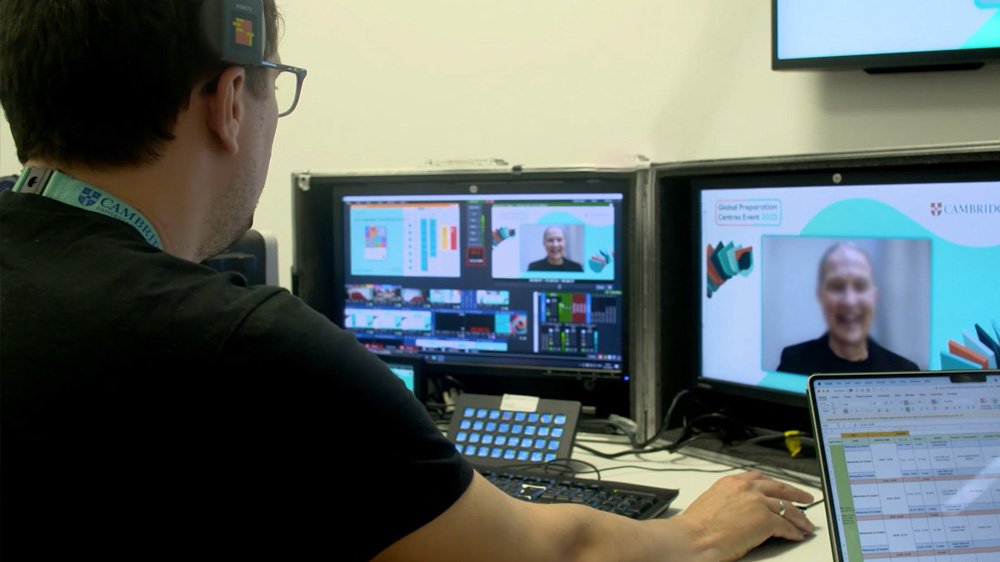
What does ‘too important’ actually mean?
It is easy to assume that importance is linked to scale, but that is not always the case.
Some of the most sensitive or high-pressure events involve relatively small audiences. Conversely, large-scale sessions can sometimes carry very little real consequence. What tends to define importance more accurately is a combination of visibility, responsibility, and the potential impact of things not going to plan.
When senior leaders are presenting, the expectation shifts. The event is no longer just about delivering information, but about how that information is received, interpreted, and remembered.
The margin for error becomes smaller. Not necessarily because the event is technically more complex, but because the consequences of visible issues are higher.
Similarly, when the message itself carries weight, whether that is a strategic update, organisational change, or a sensitive announcement, the delivery becomes part of the message.
Any hesitation, confusion, or lack of control can affect how that message lands.
In these situations, the event stops being routine, even if the format appears familiar. This is often where format decisions also come into play, particularly when teams are weighing up a Hybrid Event vs Virtual Event and how visible or controlled the delivery needs to be.
Where internal delivery begins to show its limits
This is not a question of capability.
Most internal teams are perfectly capable of setting up and running an online event. The challenge tends to emerge under pressure, particularly when multiple elements need to be managed at the same time.
Responsibility is often shared across several people, each handling a different aspect of the session. That can work when everything follows the plan, but it leaves very little room for adjustment when something changes.
This is often where a structured Virtual Event checklist becomes critical, making sure nothing is being left to assumption before the event goes live.
Speakers may be unsure about timing or sequence. Transitions between segments can become hesitant. Small technical issues, which would normally be manageable, start to feel more visible because there is no single point of control overseeing the entire delivery.
None of these issues are dramatic in isolation, but together they can create an event that feels less confident than it should.
For organisations already familiar with how to plan a Virtual Event, this is often the stage where planning alone is no longer enough to guarantee the outcome.
The difference between running an event and delivering it properly
At a basic level, most events can be run.
The platform works, participants can see and hear what they need to, and the agenda is followed from start to finish. From a purely functional perspective, that may be sufficient.
However, when an event carries more importance, expectations move beyond functionality.
Delivery becomes about how the event feels as it unfolds. Timing needs to be precise without appearing rigid. Speakers need to be supported without feeling managed. Transitions need to happen smoothly, without drawing attention to the mechanics behind them.
This is where the gap between internal delivery and more structured production becomes more noticeable. It is not about adding complexity, but about removing uncertainty.
This becomes particularly clear in internal formats like corporate town hall meetings, where the delivery itself directly affects how the message is received.

How to assess your own event
For teams trying to decide whether an event still sits comfortably within an internal setup, a few simple questions are often enough.
Is senior leadership highly visible within the session?
Would any issues during the event reflect directly on the organiser?
Are there multiple moving parts that need to be coordinated in real time?
Is there a clear point of control responsible for the overall delivery?
If the answers to these questions begin to lean in one direction, the event has likely moved beyond what would normally be considered routine.
In those cases, it is less about whether the team can run the event, and more about whether they should be expected to carry that responsibility alone.
What changes when the event is handled differently
When the structure behind an event is more deliberate, the visible experience tends to simplify.
Speakers are clearer on what is expected of them and when. Adjustments are made without interrupting the flow of the session. Transitions feel natural rather than managed.
From the audience’s perspective, nothing stands out, which is precisely the point.
The event feels controlled, not because of what is visible, but because of what is not.
In most cases, the decision is not driven by a single factor. It is the combination of visibility, responsibility, and expectation that gradually shifts an event from routine to something more significant.
Recognising that shift early is usually what determines whether the delivery feels straightforward, or whether it carries more pressure than it needs to.
If you've got a virtual event coming up and would like experienced specialists to handle the production side of things, please do get in touch and let's see how we could work together.